The Other Kinds of Knowing
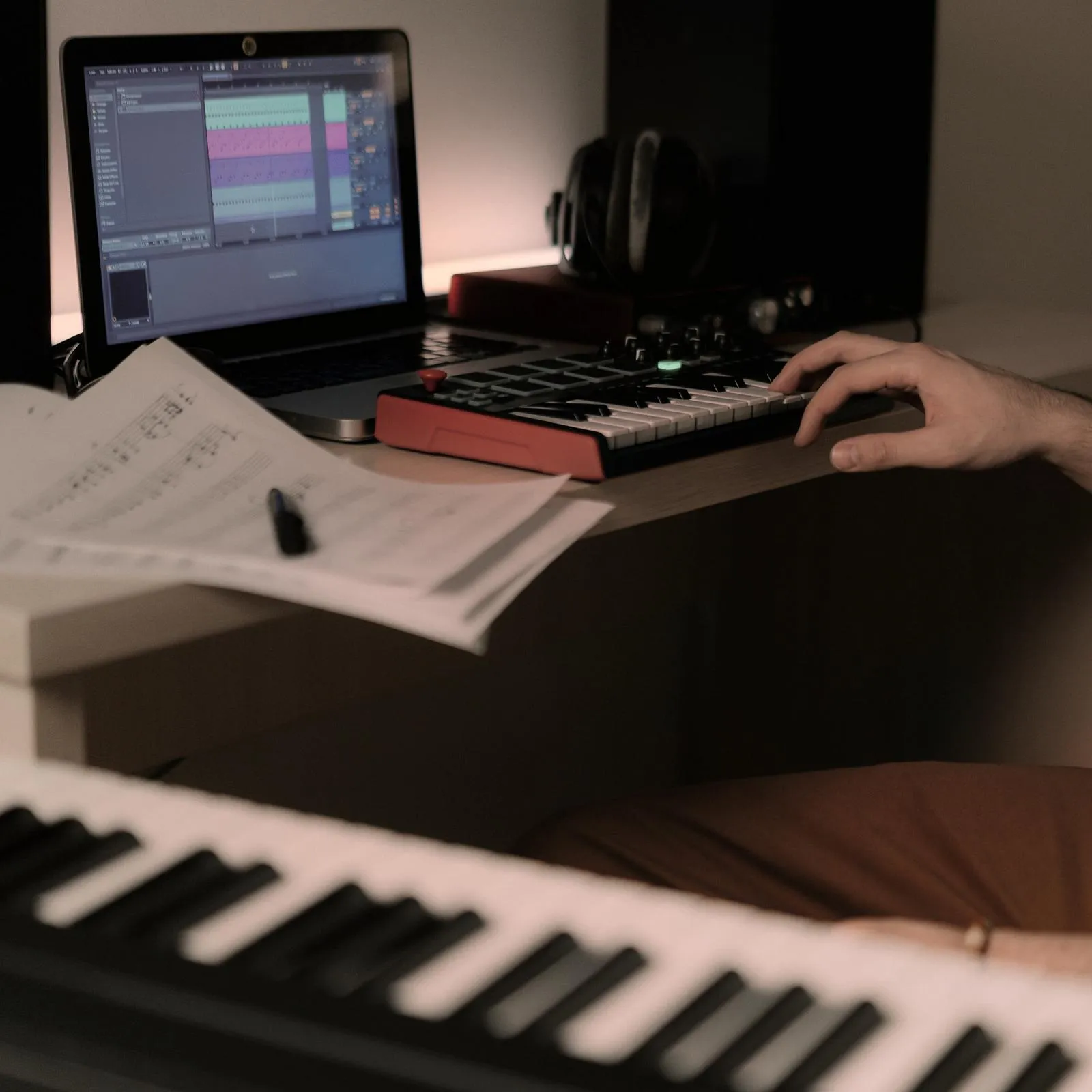
Before computers took over our world, writing music looked something like this: you had a musical idea in your head, you put it down on paper, and you hoped it would sound the way you imagined. If you could play piano reasonably well, you could approximate it — layer by layer, line by line, maybe more voices at once as you got better at it. But hearing the whole composition at once, properly instrumented, at tempo, every voice together — for that, you waited until rehearsal with an ensemble. Or you needed a genuinely vivid musical imagination, which was always the better option, if you had it.
I never lacked musical imagination. But in the second half of the eighties, something appeared in my room that changed everything anyway: a games computer called the ATARI, and a Korg M1 synthesizer.
Looked at today, that little setup would belong in a technology museum. An old ATARI, running a primitive version of Cubase, wired up through MIDI cables to the synth. It took up most of the desk. It was the most beautiful instrument I owned at the time.
Hearing my own compositions played back through MIDI, every voice at once — not sketched out on piano, but in full instrumentation — was a genuinely singular experience. Not because it sounded perfect. It sounded primitive, synthetic, with all the stiffness early MIDI is known for among anyone who’s worked with it. But it sounded. An idea that had only existed on paper and inside my head had become sound.
That difference is hard to explain to anyone who hasn’t lived it. Imagining what you wrote, and actually hearing what you wrote — those are two genuinely different kinds of knowing.
There was one more detail that seemed minor at the time but mattered a great deal in practice. A dot matrix printer.
That noisy, pin-driven mechanism from the eighties could print sheet music. Not beautifully — nowhere close to what’s possible now. But for other musicians, printed notation was far easier to read than any handwritten score. That was a practical change, and it landed immediately, right there on the desk.
A few decades have passed since then. What’s changed since is hard to compress into a few sentences, but I’ll try.
Today’s sample libraries can simulate an orchestra closely enough that only a trained ear catches the difference from a live recording. Software like Sibelius or LilyPond produces scores at a quality that once required a skilled professional engraver. Recording tools that used to live only in major studios now run on an ordinary laptop in the corner of a bedroom.
Technology hasn’t changed what you want to say. What it’s changed is how easily you can check whether the final shape of an idea actually matches what you meant.
In an earlier post — The Phone Call — I mentioned that life eventually steered me into a completely different world: IT. My working environment today is Oracle. As a software architect, I work with Oracle EBS, PL/SQL, process logic, and the analysis of fairly complex systems. On the surface, it looks like the exact opposite of art and music.
What I like about it, though, is that the word oracle has an older meaning too. A place where you don’t just look at what’s obvious on the surface. A place where you uncover the structure hiding underneath apparent chaos.
The conservatory taught me to listen. The world of IT taught me to structure. And time eventually showed me these were never two separate worlds. It’s just another kind of knowing. A different language, different tools — the same search for HARMONY underneath it all.
Happy thinking, friends.
Read Next

Maresía

Knowing You'll Pause
Get a free piano piece.
Subscribe and receive a free digital PDF of an original piano composition — plus occasional updates on music, photography, and ideas from the road.